
A mousetrap is a specialized type of animal trap designed primarily to catch mice; however, it may also trap other small animals. Mousetraps are usually set in an indoor location where there is a suspected infestation of rodents. There are various types of mousetrap, each with its own advantages and disadvantages. Larger traps are designed to catch other species of animals; such as rats, squirrels, other small rodents, or other animals.

The first spring-loaded mouse trap was invented by William C. Hooker of Abingdon Illinois, who received US patent 528671 for his design in 1894.[1][2] James Henry Atkinson, a British inventor who in 1897 invented a prototype called the "Little Nipper", probably had seen the Hooker trap in the shops or in advertisements and used it as the basis of his model.[3]
It is a simple device with a heavily spring-loaded bar and a trip to release it. Stereotypically, cheese is placed on the trip as bait. Other food such as oats, chocolate, bread, meat, butter and peanut butter are also effective. The spring-loaded bar swings down rapidly and with great force when anything, usually a mouse, touches the trip. The design is such that the mouse's neck or spinal cord will be broken, or its ribs or skull crushed, by the force of the bar. The trap can be held over a toilet or bin and the dead mouse released into it by pulling the bar. Rats are much larger than mice; a much larger version of the same type of trap is used to kill them. Some spring mouse traps have a plastic extended trigger made to look like a piece of cheese, although this is a marketing ploy to entice purchasers, not mice.
In 1899, John Mast of Lititz, Pennsylvania, filed a U.S. patent for a modification of Hooker's design that can 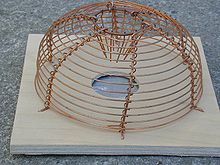
Some modern plastic designs can be set by the pressure of a single finger on a tab.
